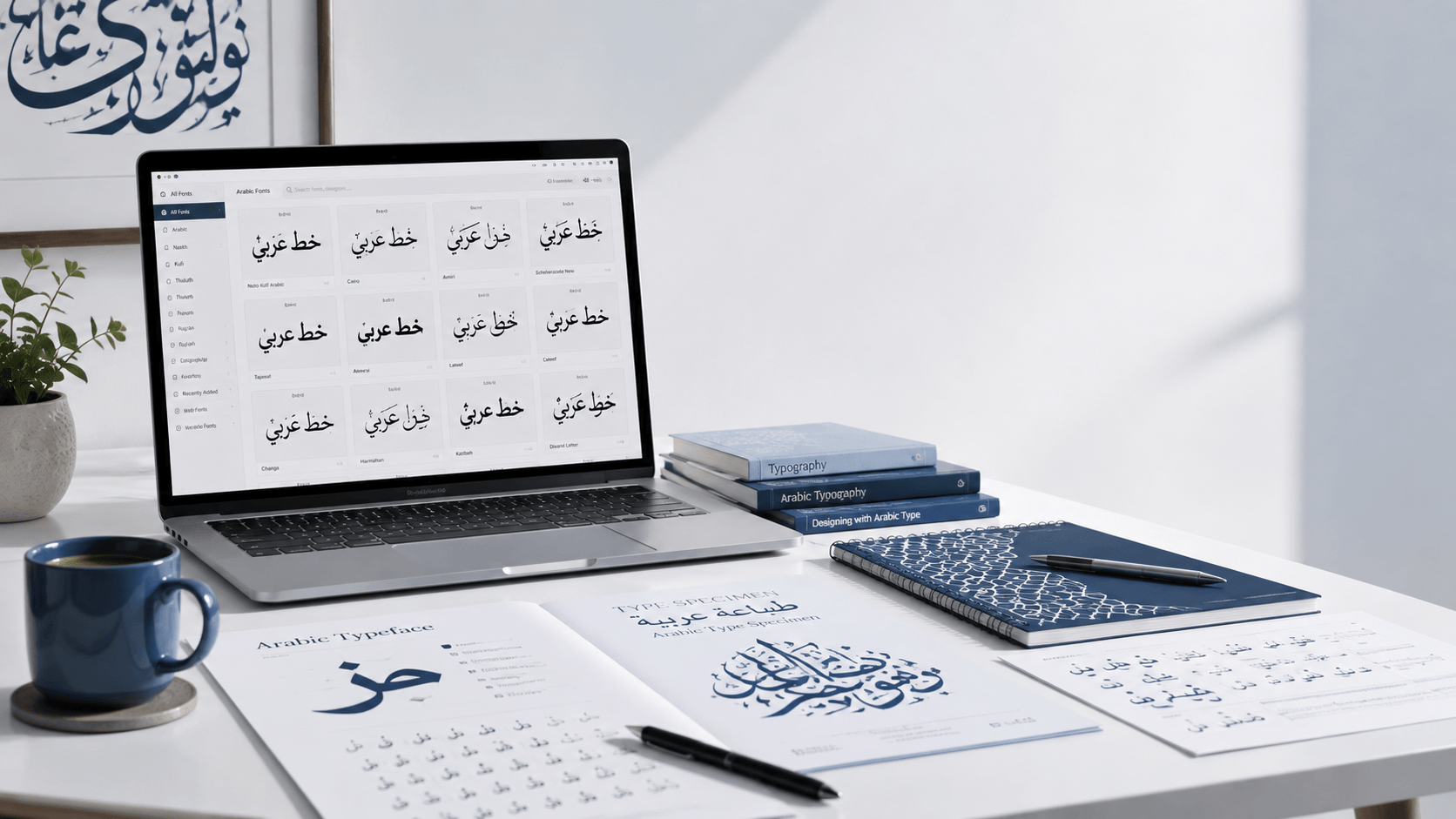
Google Fonts hosts dozens of genuine, professionally designed Arabic typefaces, all free for commercial use under the SIL Open Font License — no attribution required. The challenge isn't availability, it's knowing which of the many options is actually right for a given project. This is a practical, opinionated shortlist organized by calligraphy style, covering the fonts worth knowing by name.
Naskh: for anything that needs to be read
Amiri is the standout choice for long-form Arabic text. It's a scholarly revival of the classical typefaces used by Bulaq Press in 19th-century Cairo, and it shows — the letterforms have real historical weight while remaining highly legible at body-text sizes. Use it for articles, ebooks, and anywhere Arabic text needs to be read comfortably at length.
Scheherazade New is another strong Naskh option, developed with a particular focus on accurate rendering of complex Arabic script features, including full diacritic support — a good pick for religious or academic text where diacritics matter.
Noto Naskh Arabic is Google's own pan-script Naskh design, built as part of the broader Noto family aimed at consistent rendering across every writing system. It's a dependable, neutral choice when you need Arabic type that pairs cleanly with other Noto-family Latin fonts in a multilingual project.
Kufi: for logos and bold display text
Reem Kufi is the most popular modern Kufic webfont, and for good reason — its clean, geometric letterforms reduce beautifully to a bold wordmark or heading. It comes in multiple weights, making it flexible for both a single striking word and slightly longer headline use.
Noto Kufi Arabic offers a more restrained, formal take on Kufic geometry, useful when you want the angular Kufic character without Reem Kufi's more contemporary, slightly playful edge.
Thuluth: for ceremonial and formal pieces
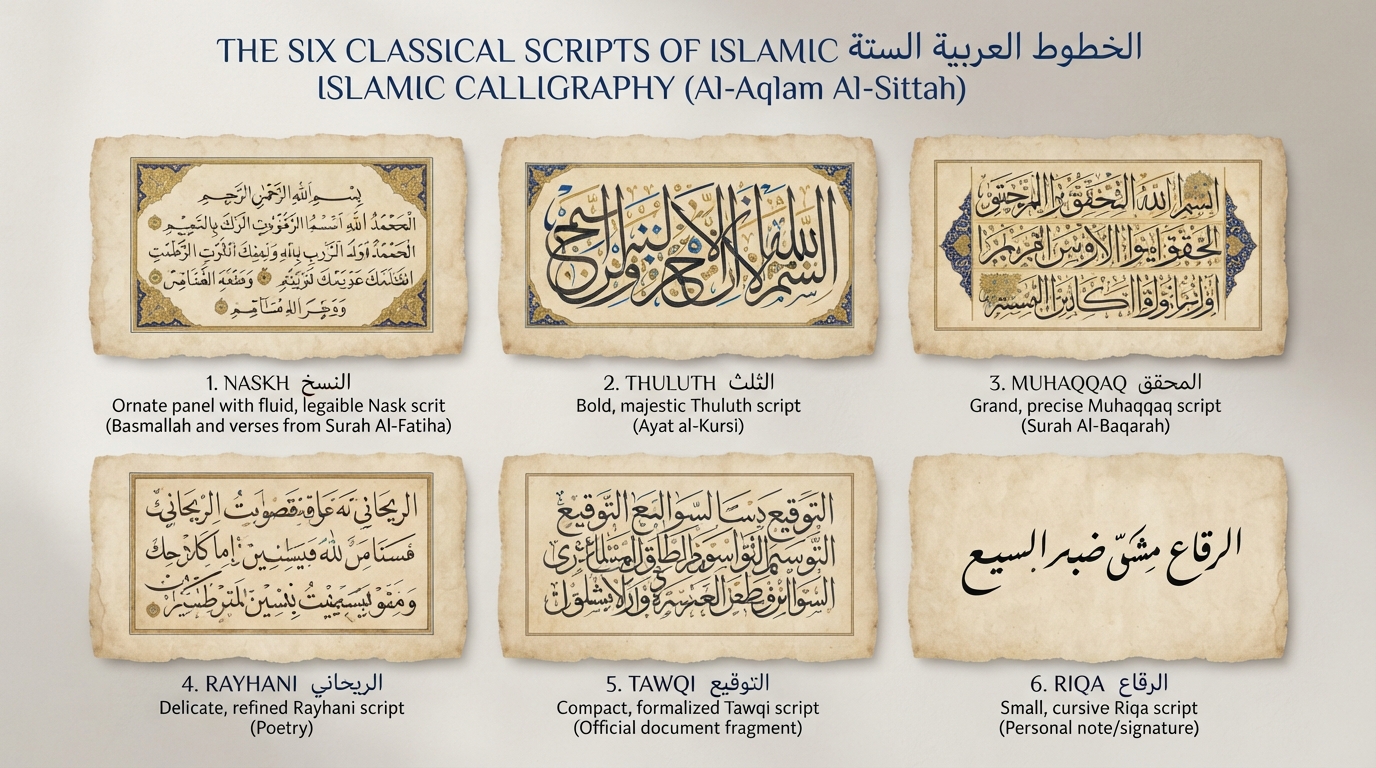
Katibeh is the standout here, blending Naskh's structural clarity with genuine Thuluth flourishes — a practical middle ground that reads more legibly than historical Thuluth calligraphy while still carrying its ceremonial visual weight. It's the font to reach for on certificates, formal titles, and wedding invitation headlines.
Ruq'ah: for a handwritten, personal feel
Aref Ruqaa is the primary open-source option in this category, capturing Ruq'ah's simplified, quick handwriting style. It works well anywhere a design needs to feel personal or informal rather than typeset — a handwritten note aesthetic, casual social content, or a personal signature-style mark.
Rakkas offers a bolder, more decorative take with roots in the same handwriting tradition, useful for display use where you want personality without going fully ornamental.
Farisi (Nasta'liq): for Persian and Urdu contexts
Mirza is a solid general-purpose Nasta'liq option, capturing the script's distinctive diagonal, hanging baseline in a webfont that renders reliably across browsers.
Noto Nastaliq Urdu is purpose-built for Urdu text specifically and is the more accurate choice if your content is genuinely Urdu rather than Persian, since the two languages' typographic conventions diverge in ways a general Nasta'liq font may not fully capture.
Gulzar rounds out the category with a slightly more decorative, poetry-oriented feel — a good fit for literary or artistic Farisi content.
Modern and digital: for UI and contemporary branding
This is the largest and fastest-growing category of Arabic webfonts, built specifically for screens rather than adapted from calligraphic tradition. Cairo and Tajawal are two of the most widely used Arabic UI fonts on the web today, both offering multiple weights with clean, geometric letterforms that pair naturally with Latin sans-serif fonts in bilingual interfaces. IBM Plex Sans Arabic extends IBM's well-regarded Plex system to Arabic script, a strong pick if your project already uses Plex for Latin text and needs a matching Arabic counterpart. Alexandria offers a slightly warmer, more contemporary geometric feel, useful for modern branding that wants to avoid looking too corporate.
How to actually compare these before choosing
Font names and specimen images only tell you so much — the real test is typing your own text and seeing how a specific font handles your specific words, since Arabic letterform behavior can vary noticeably between families even within the same category. Every font mentioned here is available in the Arabic calligraphy generator on this site — type your text once and compare all of them live, side by side, before committing to one.
Frequently asked questions
Are Google Fonts really free to use commercially?
Yes. Every font on Google Fonts, including all the Arabic families listed here, is released under the SIL Open Font License, which explicitly permits commercial use with no attribution required. See our [free vs. paid fonts guide](/blog/free-vs-paid-arabic-fonts) for more on how this compares to premium font licensing.
What's the best all-purpose Arabic font if I only need one?
Amiri for anything text-heavy, or Cairo if your project is primarily digital/UI-focused and needs a clean, modern feel. Between the two, most general-purpose projects are well served.
Which Arabic font is closest to traditional Qur'anic calligraphy?
Scheherazade New and Amiri both draw heavily on classical Naskh manuscript traditions and are common choices for religious text specifically because of their historical accuracy and full diacritic support.