Transliteration vs. translation: know which one you need
These are not the same thing, and mixing them up is the single biggest source of errors in name-based calligraphy.
Transliteration maps the sounds of a name into Arabic letters. "Sarah" becomes سارة — Arabic letters chosen to approximate how the name sounds when spoken, not because those letters mean anything. This is what you want almost every time you're rendering a personal name, because names generally don't have a "translation" — Sarah isn't a word with an Arabic equivalent, it's a sound.
Translation converts meaning. It only applies if the name is also a common word — "Layla" (ليلى) already functions as an Arabic name and doesn't need translating, but a name like "Grace" could theoretically be translated to the Arabic word for grace (نعمة) rather than transliterated phonetically (غريس). Which one is correct depends entirely on intent: are you rendering the name Grace, or the concept of grace? Get this wrong and you've made a different piece entirely.
Why automatic transliteration tools need a human check
Automatic English-to-Arabic transliteration (including the tool built into this site's generator) is a fast way to get a solid first draft, but Arabic script doesn't have one-to-one letter equivalents for every English sound. Vowels are a particular problem: Arabic's short vowels are often represented with diacritical marks (harakat) that are commonly omitted in everyday writing, which means the same consonant skeleton can be read multiple ways depending on context.
Names with sounds that don't exist in Arabic — a hard "P," a "V," a "G" as in "George" — get approximated using the closest available letter, and different transliteration conventions sometimes disagree on which approximation to use. "Peter" might become بيتر (using ب for the P-sound, the closest available) depending on convention. None of these approximations are "wrong" exactly, but they are judgment calls, which is exactly why a native Arabic speaker double-checking the result before you commit to print, engraving, or anything permanent is worth the five minutes it takes.
Picking a style once the text is right
Once you have accurate Arabic text, the calligraphy style you choose changes the feeling of the name without changing what it says.
Naskh is the safest default — rounded, highly legible, reads clearly at small sizes. Good for jewelry engraving, small prints, or anywhere the name needs to be unambiguously readable rather than purely decorative.
Thuluth gives a name more visual weight and ceremony — the tall ascenders and interlocking curves make even a short name look substantial. This is the style you'll see most often on formal gifts, plaques, and framed prints.
Kufi turns a name into something closer to a geometric mark than handwriting — bold, angular, almost logo-like. Works well for a name used repeatedly as a personal brand mark (a monogram, a signature graphic) rather than a one-off print.
Farisi (Nasta'liq) gives names a flowing, diagonal elegance associated with Persian and Urdu calligraphy traditions — a strong choice if the name has Persian or South Asian origin, or if the intended recipient has a cultural connection to that tradition specifically.
A practical workflow
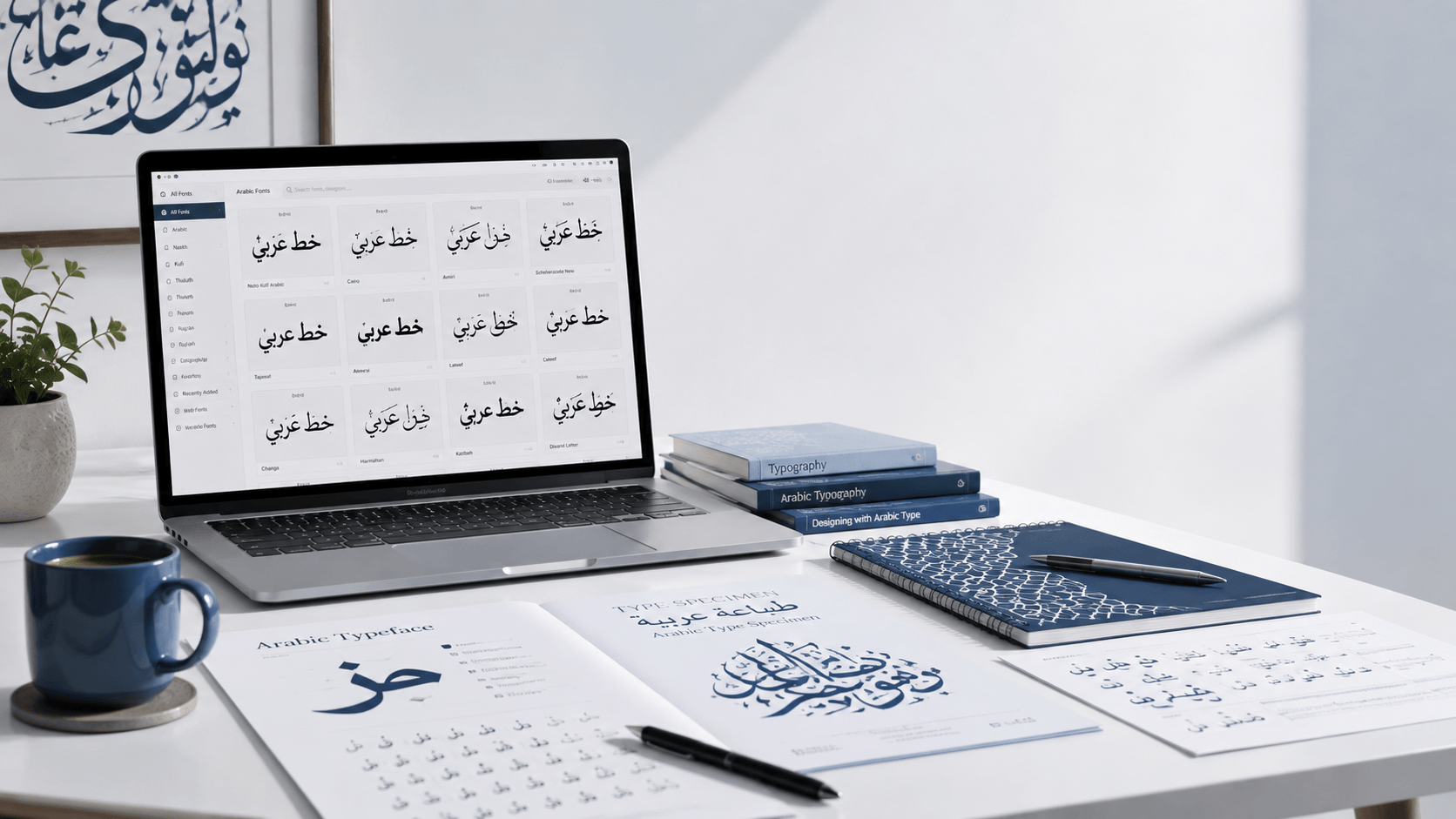
Type the name into a transliteration tool to get a first-pass draft, then have a native or fluent Arabic speaker confirm the spelling represents the name the way you intend — not just that it "looks right." From there, open the Arabic calligraphy generator, paste the confirmed text, and preview it across several styles side by side rather than committing to the first one that looks nice; a name that reads beautifully in Thuluth might be genuinely hard to read in the same size set in Diwani. Once you've settled on a style, export as SVG if the design will be resized, engraved, or printed at more than one size — PNG is fine if it's going straight to a single fixed digital placement like a social media post.
Frequently asked questions
Is there one "correct" way to write a name in Arabic?
Usually no — most non-Arabic names can be transliterated more than one valid way, since Arabic script doesn't map perfectly onto every English sound. Consistency matters more than finding a single "official" spelling; once you pick a spelling, use it consistently across everything for that person or brand.
Should I include diacritics (harakat) on a name?
It depends on the use case. Diacritics remove ambiguity about how a name should be pronounced, which is useful for engraving or gifts. For decorative or logo-style use, many designers omit them, the same way most everyday Arabic writing does — it's a style choice, not an error.
Can I use this for a tattoo of my name?
Yes, many people do, but treat it with extra care — a tattoo is permanent, so get the transliteration confirmed by a native speaker before finalizing, and export as SVG so your tattoo artist has a crisp, resizable reference. See our [tattoo guide](https://arabiccalligraphyfonts.com/blog/arabic-calligraphy-tattoo-guide) for a full walkthrough.