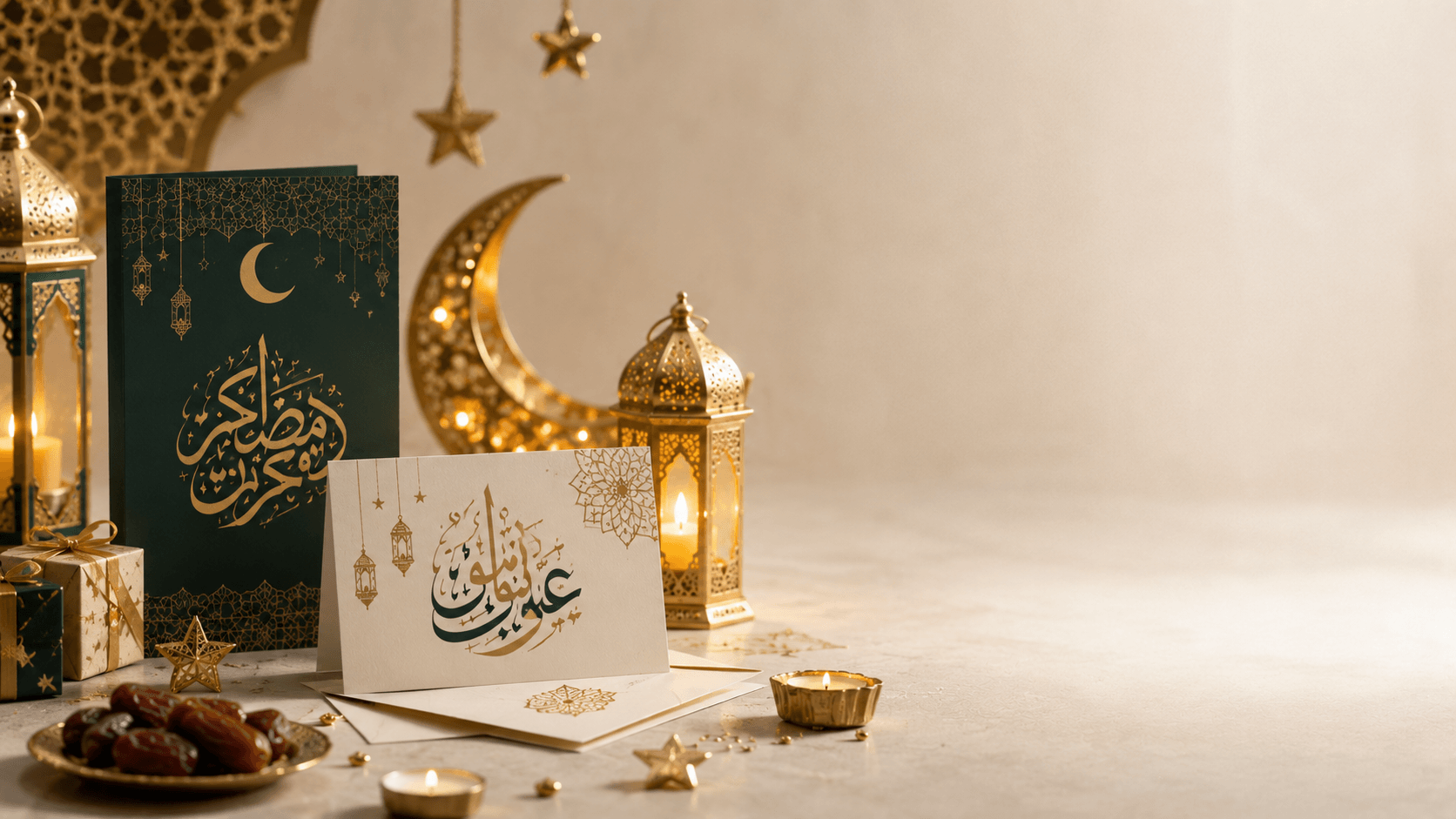
Ramadan and Eid greeting designs are some of the most widely shared pieces of Arabic calligraphy every year — cards, social posts, storefront signage, and printed banners all lean on the same core phrases rendered in countless different styles. This guide covers the standard phrases, which styles and colors suit each occasion, and a fast workflow for producing your own greeting from scratch.
The core phrases
Ramadan Kareem ("Generous Ramadan") and Ramadan Mubarak ("Blessed Ramadan") are the two standard greetings used throughout the month, largely interchangeable and both widely understood — the choice between them is mostly regional and personal preference rather than a meaningful difference in formality.
Eid Mubarak ("Blessed Eid") is the standard greeting for both Eid al-Fitr (marking the end of Ramadan) and Eid al-Adha (later in the Islamic calendar) — the same phrase covers both occasions, so a design built for one can typically be reused for the other with just a date or context change if needed.
Longer phrases — a specific dua, a line about the month's significance, or a family's personalized greeting — work well for a more detailed card or a piece meant to be kept rather than scrolled past, though the four core phrases above remain the fastest, most universally recognized choice when you need something quick and clear.
Matching style to the piece
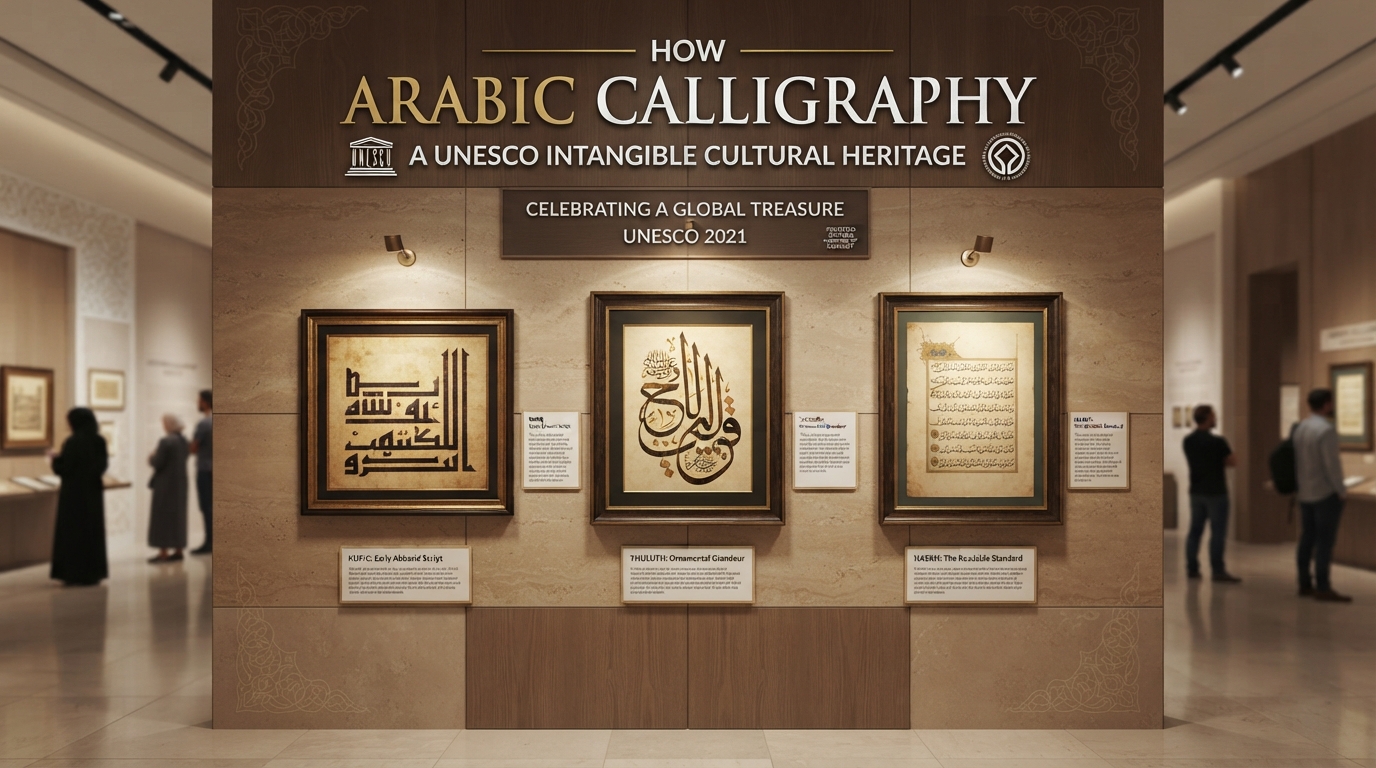
Thuluth is the most traditional choice for Ramadan and Eid greetings specifically — its formal, ceremonial quality matches the occasion, and it's the style you'll see most often on printed cards and larger banners meant to feel special rather than casual.
Naskh works well for greetings that include more text — a longer dua or message alongside the core "Eid Mubarak" phrase — since its readability holds up better than Thuluth once you're setting more than a few words.
Kufic suits a more modern, minimalist greeting — a bold, geometric "Eid Mubarak" works especially well for a clean social media graphic or a contemporary brand's seasonal post, where the goal is a quick, confident visual statement rather than ornamental detail.
Color choices for the season
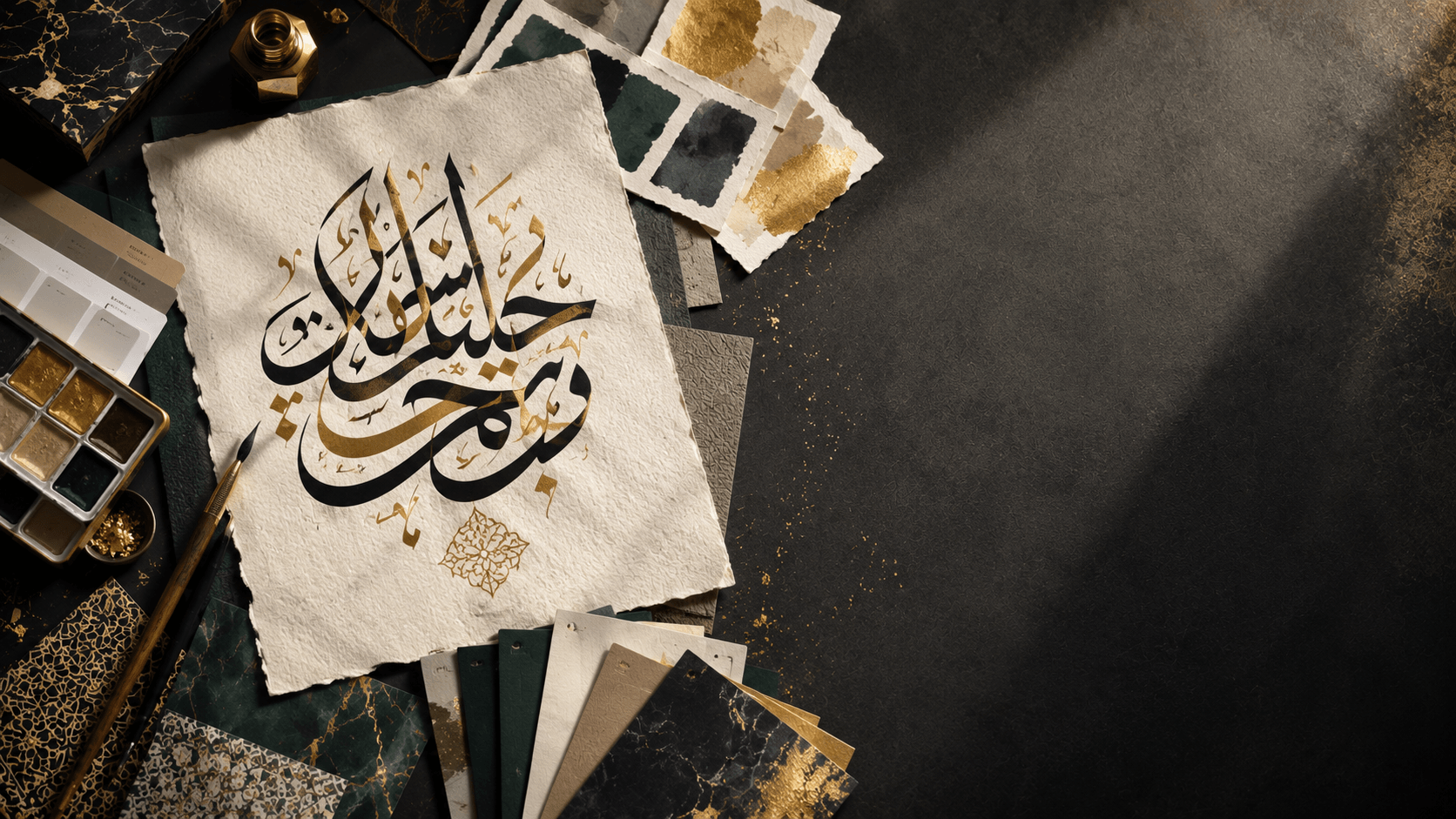
Green holds strong cultural and religious association for Islamic and Ramadan-specific content, making it one of the most common background or accent choices for this occasion specifically. Gold and warm metallics pair naturally with green or deep jewel tones for a premium, celebratory feel — this combination shows up constantly across Ramadan and Eid greeting card designs for good reason, it reads as festive without requiring literal imagery like lanterns or crescents to establish the mood. Deep blue and purple are common alternatives to green, carrying similar ceremonial weight while giving some visual variety if you're producing a series of pieces across the month and don't want every design to look identical. See our full guide to choosing colors and backgrounds for more on pairing text color against different background types.
A fast workflow for greeting designs
Start with your phrase — "Eid Mubarak" or "Ramadan Kareem" cover most needs — and open the Arabic calligraphy generator. Preview it across Thuluth, Naskh, and Kufic to see which feels right for your specific use (a formal printed card versus a quick social post generally point toward different styles, as covered above). Set your color and background — a solid deep green or navy background with gold or white text is a reliable, fast starting point if you're not sure where to begin. If the design is headed to print (physical cards, a banner), export as SVG for crisp results at whatever size you're printing; if it's headed straight to social media, export as PNG at your platform's recommended size — see our Instagram sizing guide for exact dimensions.
Building a reusable template
Because Ramadan and Eid greetings recur every year on a predictable calendar, it's worth saving your design choices (font, color palette, layout) as a personal or brand template rather than starting from scratch each season — swap in the year's specific message or date and reuse the same visual identity, which also helps a business or personal account build a recognizable, consistent presence around these occasions year over year.
Frequently asked questions
What's the difference between Ramadan Kareem and Ramadan Mubarak?
Both mean roughly "blessed/generous Ramadan" and are used interchangeably as greetings throughout the month — the choice between them is a matter of regional custom and personal preference rather than a meaningful difference in formality or correctness.
Is Eid Mubarak used for both Eid al-Fitr and Eid al-Adha?
Yes, the same greeting applies to both occasions. If you want to be more specific, you can name the occasion directly (Eid al-Fitr Mubarak or Eid al-Adha Mubarak), but the standard, universally understood greeting works for either.
What colors are traditionally associated with Ramadan and Eid designs?
Green is the most common association for Islamic and Ramadan-specific content, often paired with gold or warm metallic accents. Deep blue and purple are common, similarly ceremonial alternatives if you want visual variety across a series of designs.